About
Early cancer detection lowers treatment costs1,2 and saves lives3,4
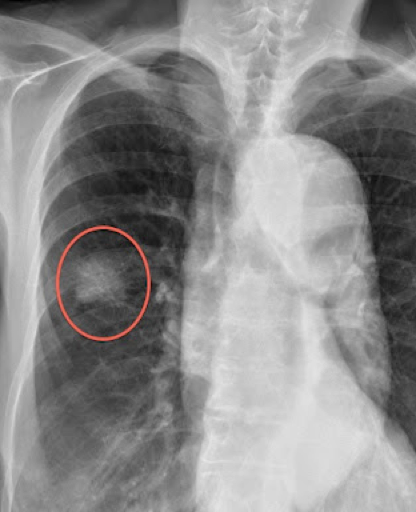
… but most lung nodules discovered in radiology studies lack clear
indicators of malignancy,5 leaving uncertainty about which
patients need intervention.
We are developing a diagnostic test that aims to better clarify which
patients are most likely to benefit from either tissue sampling or
continued monitoring. This helps focus physician efforts on patients
that require more active intervention.

Early detection and resection is crucial…
Early detection and resection is crucial…
82% of stage I patients remain recurrence-free five years after
surgery.6
Lung nodules are detected in 1/4 of CT scans7 with few
ultimately identified as cancer.8

because time is the enemy…
because time is the enemy…
Nearly a third of patients wait three months or more to begin
treatment.9
Current practice for indeterminate nodules is to diagnose over
time, so doctors must wait for the next CT scan to see if a nodule
grows.8,10

…and a diagnostic could change everything.
…and a diagnostic could change everything.
A diagnostic tool that identifies high-risk patients could move
them to the front of the line for a biopsy.
Their treatment regime could start earlier, which has been
associated with better outcomes in early-stage lung cancer.11,12
References
- Reddy SR, Broder MS, Chang E, Paydar C, Chung KC, Kansal AR. Cost of cancer management by stage at diagnosis among Medicare beneficiaries. Curr Med Res Opin. 2022;38(8):1285–1294. doi:10.1080/03007995.2022.2047536
- de Nijs K, de Koning HJ, van der Aalst C, ten Haaf K. Medical costs of lung cancer by stage, histology and first-line treatment modality in the Netherlands (2012–2021). Eur J Cancer. 2024;208:114231. doi:10.1016/j.ejca.2024.114231
- National Lung Screening Trial Research Team; Aberle DR, Adams AM, Berg CD, et al. Reduced lung-cancer mortality with low-dose computed tomographic screening. N Engl J Med. 2011;365(5):395–409. doi:10.1056/NEJMoa1102873
- de Koning HJ, van der Aalst CM, de Jong PA, et al. Reduced lung-cancer mortality with volume CT screening in a randomized trial. N Engl J Med. 2020;382(6):503–513. doi:10.1056/NEJMoa1911793
- Vlahos I, Stefanidis K, Sheard S, Nair A, Sayer C, Moser J. Lung cancer screening: nodule identification and characterization. Transl Lung Cancer Res. 2018;7(3):288–303. doi:10.21037/tlcr.2018.05.02
- Rajaram R, Huang Q, Li RZ, et al. Recurrence-free survival in patients with surgically resected non-small cell lung cancer: a systematic literature review and meta-analysis. Chest. 2024;165(5):1260–1270. doi:10.1016/j.chest.2023.11.042
- Gould MK, Tang T, Liu IA, et al. Recent trends in the identification of incidental pulmonary nodules. Am J Respir Crit Care Med. 2015;192(10):1208–1214. doi:10.1164/rccm.201505-0990OC
- MacMahon H, Naidich DP, Goo JM, et al. Guidelines for management of incidental pulmonary nodules detected on CT images: from the Fleischner Society 2017. Radiology. 2017;284(1):228–243. doi:10.1148/radiol.2017161659
- Vidaver RM, Shershneva MB, Hetzel SJ, Holden TR, Campbell TC. Typical time to treatment of patients with lung cancer in a multisite, US-based study. J Oncol Pract. 2016;12(6):e643–e653. doi:10.1200/JOP.2015.009605
- Christensen J, Prosper AE, Wu CC, et al. ACR Lung-RADS v2022: assessment categories and management recommendations. J Am Coll Radiol. 2024;21(3):473–488. doi:10.1016/j.jacr.2023.09.009
- Samson P, Patel A, Garrett T, et al. Effects of delayed surgical resection on short-term and long-term outcomes in clinical stage I non-small cell lung cancer. Ann Thorac Surg. 2015;99(6):1906–1913. doi:10.1016/j.athoracsur.2015.02.022
- Khorana AA, Tullio K, Elson P, et al. Time to initial cancer treatment in the United States and association with survival over time: an observational study. PLOS ONE. 2019;14(3):e0213209. doi:10.1371/journal.pone.0213209
Currently under development, product not cleared or available in the US.